The Quiet After the Crackle: A Gentle Landing for Wired, Tired Bodies
Bonfire Night may be behind us, but November has a long tail. A local display here, a stray rocket there, Diwali celebrations, a wedding, a neighbour who found a forgotten box of fireworks in the shed. For plenty of people, the difficult part is not the bangs themselves. It is the hour afterwards, when the house is quiet but your body has not quite got the memo.
You are not being dramatic. You are having a very ordinary nervous-system response to a very unusual evening.
Why your body is still braced after the bangs
A sudden loud noise can trigger a startle response. In simple terms, your brain registers a possible threat before you have had time to think about it, and your body gets ready: muscles tense, heart rate lifts, breathing goes shallow, senses sharpen. That is useful if the threat is real. It is less useful when the threat was a Catherine wheel in someone else’s garden and you are now lying in bed listening to the fridge hum.
The system can stay switched on for a while. You might feel jittery, tearful, irritated, wide awake but exhausted, or strangely flat. None of that means you are bad at relaxing. It means your body is still checking the perimeter.
So the aim here is not to force yourself to calm down. It is to give your system some gentle evidence that the loud part is over.
Start with the room, not your breath
When people feel wired, they often try to breathe their way out of it straight away. Sometimes that works. Sometimes it just makes you feel more aware of how fast your heart is going. A softer first step is orienting: letting your eyes and ears slowly take in the room around you.
Try this, sitting or lying down somewhere you feel reasonably safe:
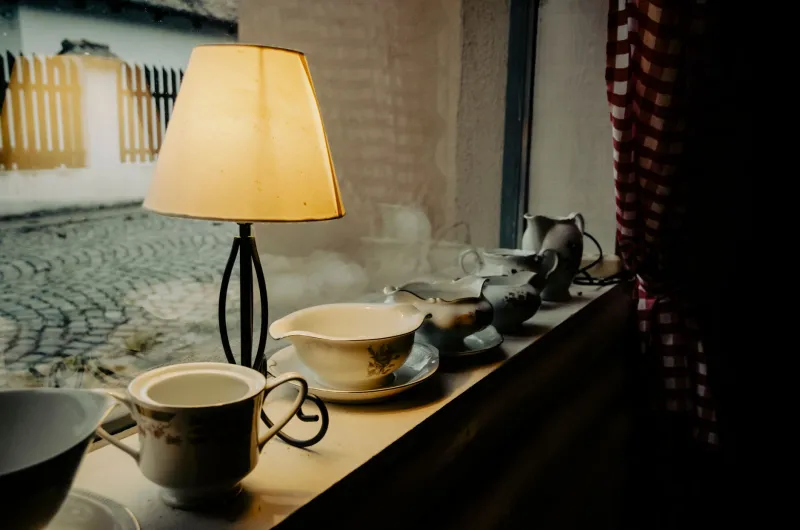
- Let your eyes move slowly around the space. Do not stare. Just notice three things you can see — a lamp, the edge of a curtain, the pattern on a mug.
- Let your attention rest on two sounds. The radiator. A car passing. Your own breathing. You are not hunting for silence; you are reminding yourself that the soundscape has changed.
- Notice one physical sensation. The weight of your body on the chair or mattress. The temperature of the air on your hands. The texture of a blanket.
- Turn your head slowly to one side, then the other, if that feels comfortable. This is a simple way of signalling to the brain that you are checking your surroundings rather than freezing in them.
This is not a cure for noise sensitivity, trauma or anxiety. It is a small, practical signal. You are allowed to do it without believing it will fix everything.
A short breath sequence for wired-but-tired
Once you have oriented a little, you might try a brief breathing practice. Keep it gentle. If you have a history of panic, asthma or any condition where breath work makes you feel worse, skip this and stay with the orienting steps instead.
Try five rounds of this:
- Breathe in through your nose for a comfortable count of four.
- Breathe out through your nose or mouth for a comfortable count of six.
- Pause for a moment before the next breath in. No straining.
The longer exhale is often described as a way of nudging the parasympathetic side of the nervous system — the rest-and-digest side. It is not a magic switch. Think of it as turning the volume down one notch, not pulling the plug.
If counting makes you tense, simply breathe out for a little longer than you breathe in, without counting. If that also feels like too much, go back to looking around the room. That counts.
For sensitive sleepers and shared households
If you live somewhere that still has the odd late-night bang, a bit of preparation can help the landing feel less abrupt. Close the curtains, lower the main lights, and put on something with a steady, low sound — a radio station, a fan, a familiar album. Avoid the temptation to scroll through videos of fireworks or local noise complaints. Your nervous system does not need more evidence of bangs.
A warm drink and a boring routine can be surprisingly effective. Wash your face. Put your phone in another room if you can. Do the same small sequence you always do before bed, even if you feel wired. Repetition is its own kind of signal.
If you are sharing a house, try not to turn the aftermath into a performance of being fine. Say what you need: the light off, the window shut, ten minutes without conversation. A household that can name its nervous systems is usually a calmer household.
Pets, children and other nervous systems
Animals and children often take their cues from us, but they also have their own sensitivities. Do not force a frightened pet to be held. Give them a safe den, close the curtains, and leave a radio on low if that is what they are used to. If a pet is severely distressed by noise, speak to your vet — there are proper plans for that, and they are not a sign of failure.
With children, keep explanations short and practical. We are safe now. The bangs have stopped. Let us make the room cosy. Then do something ordinary together: toast, a bath, a story. Children do not need a lecture on the startle response. They need a grown-up whose body is starting to settle.
When to seek more support
If loud noises leave you panicking, dissociating, or unable to sleep night after night, that is worth talking about with your GP. Noise sensitivity can be linked to anxiety, trauma, hyperacusis, migraine and other conditions, and a body-first wind-down is not a replacement for proper support. The same goes for children or pets who are consistently distressed.
Most of us will have the odd wired night after a loud evening. The goal is not to become someone who never flinches. It is to get a little better at coming back.
So after the last crackle, do not rush yourself into calm. Look around. Feel your feet. Let your exhale be a bit longer. Put the kettle on. The quiet is allowed to take its time.