Packed In at Oxford Circus: A Grounded Alternative to 'Just Breathe'
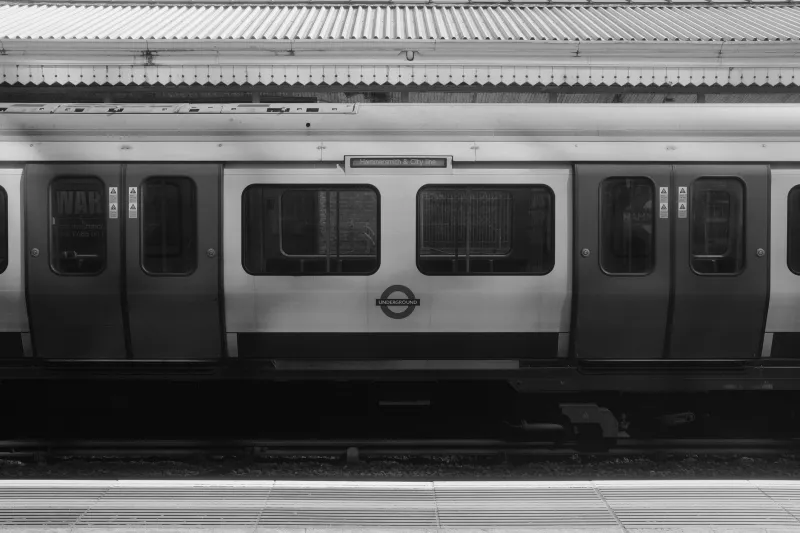
It is 7.48am on a grey November morning and the Central line carriage is doing that familiar trick of seeming full, then somehow accepting twelve more people. Someone’s rucksack is against your back. The announcement is crackling. The air is warm in a way that makes you notice your own neck. And somewhere in your head, a well-meaning voice says: just breathe.
If that instruction makes you want to climb out through the window, you are not alone. Breathing is not a bad thing. But on a packed Tube, it can be a surprisingly poor first instruction.
Why 'just breathe' can backfire
Breathwork has a good reputation, and for good reason. Slow, comfortable breathing can help settle the nervous system in the right conditions. But the right conditions matter. Research on interoception — the body’s sense of its own internal state — suggests that turning attention inward is not universally calming. For some people, especially when anxiety is already high, noticing the breath can amplify awareness of tightness, heat, dizziness or a racing heart. On a crowded train, that inward focus has very little quiet to land in.
There is also the context. A packed carriage is hot, noisy, close and hard to leave. It is not a meditation hall. Being told to breathe deeply in that environment can feel less like support and more like a test you are failing. If your chest is tight because you are squashed against a door, the problem is not that you have forgotten how to inhale. The problem is that your body is reading the situation as cramped and inescapable.
So the invitation here is not to abandon breathing forever. It is to start somewhere else when the carriage is full.
Start with the floor, not your lungs
Your feet are a good place to begin because they are boring, ordinary and already there. You do not need to close your eyes. You do not need to look serene. You just need to notice the floor through your shoes.
If you are standing, feel the soles of your feet against the floor. Notice the heel, the ball of the foot, the outside edge. Press down very slightly, as if you are checking the ground is still there. If you are holding a rail, notice the grip of your hand. If you are sitting, feel the back of the seat and the weight of your body on the cushion. This is grounding through pressure and position, not through a forced deep breath.
It can help to shift your weight slowly from one foot to the other, just once or twice. Not enough to be noticeable. Enough to remind your body that it has a boundary and that the floor is holding some of the load.
Use your eyes: orient to exits and colour
When we feel trapped, our attention can narrow. Orienting is the opposite: letting the eyes move around the space and take in where you are. On the Tube, you can do this without staring at anyone.
Look for the exit signs. Find the line map and notice the colour of your line — the red of the Central line, the light blue of the Victoria, the brown of the Bakerloo. At Oxford Circus, you might find the roundel, the platform number, the yellow of a warning line, the dark blue of a station sign. Name a few colours silently. Look towards the doors, even if they are not opening yet. Your eyes do not need to fix on anything for long. The point is to let your visual field widen again.
This is not about distracting yourself from reality. It is about giving your brain more information than 'trapped'. The exit is there. The carriage has an end. The platform will arrive.
Name three sounds — not three breaths
Sound is another outward anchor. Instead of counting breaths, count sounds. The rumble of the train. The hiss of the doors. The tap of someone’s shoe. A phone buzzing. The announcement you cannot quite understand. Name three, then stop. You are not trying to become a Zen master of the Northern line. You are just reminding your attention that it can rest on something outside your own chest.
If you notice yourself judging the sounds — too loud, too annoying, too much — that is fine too. You can label that as thinking and go back to the next sound. No perfection required.
Give yourself permission to use distraction
Distraction gets a bad press in wellness spaces, as if the only respectable response to discomfort is to sit with it nobly. But distraction is sometimes a sensible bridge. A podcast, a game, a familiar playlist, a text to a friend, counting stations, reading the same page of a book four times — these are not moral failures. They are ways of getting from one stop to the next without pouring more fuel on the fire.
The useful question is not 'am I avoiding my feelings?' but 'is this helping me stay in my life today?' If a podcast helps you take the Tube to work, it is doing a job. If distraction is the only thing you can do and your world is getting smaller, that is worth talking about with someone. But as part of a toolkit, it is allowed.
A ninety-second carriage sequence
If you want something to remember when the doors close, try this: feet on the floor, three colours, three sounds. Then ask yourself: do I need to breathe differently, or do I need to feel less trapped? If slow breathing helps, use it. If it makes you feel worse, skip it. You are allowed to choose the tool that fits the moment.
If panic rises and you can safely get off at the next station, do that. Step away from the crowd, find a quieter spot on the platform, tell a member of staff if you need help. There is no prize for staying on a train that is making you unwell.
When transport panic starts to limit your life
This article is not a cure for anxiety, and it is not a diagnosis. If you find yourself avoiding the Tube, leaving earlier and earlier, cancelling plans, or feeling panicky on buses and trains more often, it is worth speaking to your GP. Transport-related panic and claustrophobia are treatable, and talking therapies such as CBT are available on the NHS. If you experience chest pain, fainting or severe physical symptoms, seek urgent medical advice.
The aim is not to feel calm on command in a crowded carriage. It is to stay with yourself while you travel. Breathe if it helps. Ground if it does not. Either way, you are allowed to take up your space — even when the train is packed.