At Eleven, Feel the Pavement: A Remembrance Silence for Real Bodies
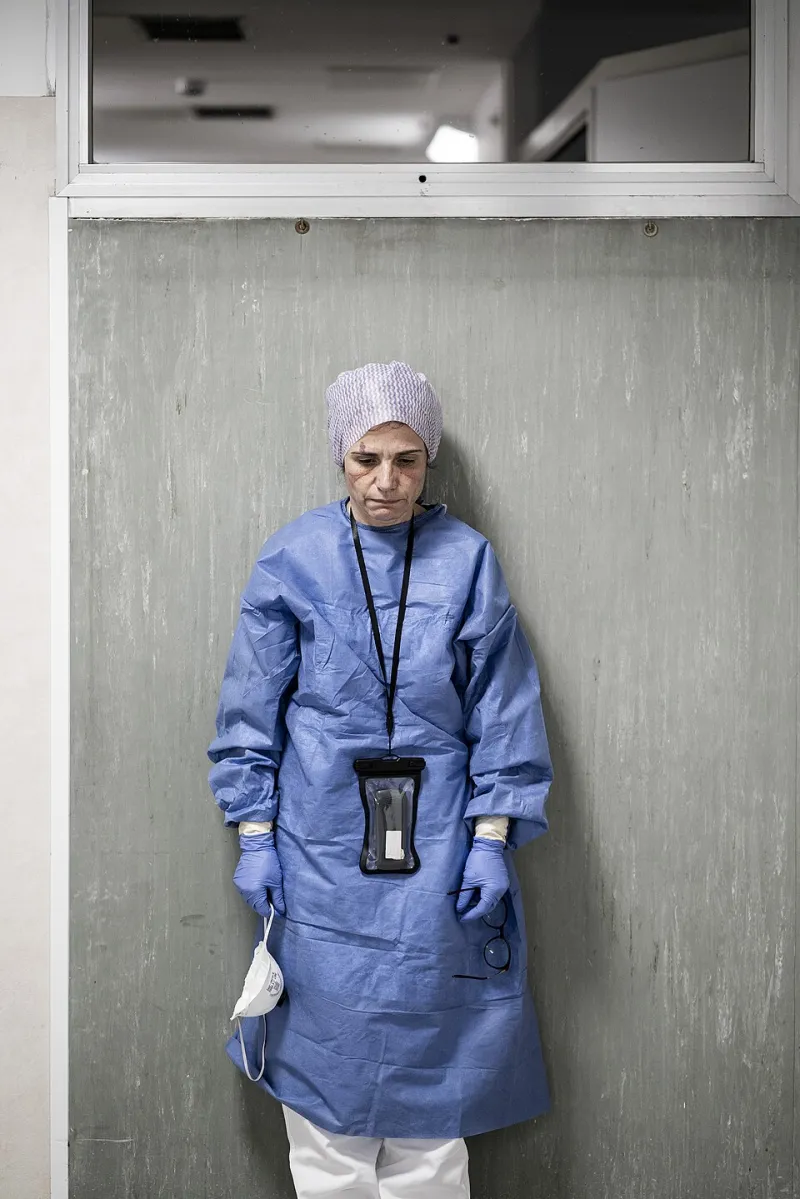
Photo: Alberto Giuliani, CC BY-SA 4.0, via Wikimedia Commons
Tomorrow at eleven, many of us will stop. Some will be at the Cenotaph, some by a supermarket trolley, some at a desk with a Teams call on mute. The two-minute silence is a shared pause, but it is also a very personal physical event. If you have ever spent it thinking mainly about whether you are doing it right, you are not alone.
This is not a guide to perfect stillness. It is a way of being in the silence rather than watching yourself from the outside. The body is not an inconvenience here. It is how you arrive.
Before eleven: a small settling practice
If you can, start a minute early. Not to create a routine, just to give yourself a landing strip. Put both feet flat on the floor. If you are standing, let your weight drop through your heels and the balls of your feet. Unlock your knees a little. Let your coat hang from your shoulders rather than holding it up with your neck.
Notice your hands. Are they clenched around a phone, a bag handle, a cup? Loosen the grip by about ten per cent. You do not need to arrange your fingers beautifully. Just let them be less braced.
Then leave your breath alone. This is important. A lot of mindfulness advice tells you to breathe deeply, but in a public silence that can feel like a performance. Instead, let the next breath arrive. If it is shallow, let it be shallow. If you sigh, let the sigh happen. The aim is not to breathe perfectly; it is to stop managing the moment.
If you are cold, crowded or self-conscious
Remembrance events in the UK often involve drizzle, a stiff breeze and standing on a pavement while a bus idles nearby. That is the real setting. You do not need to transcend it.
Cold: let your shoulders soften downwards, even if they want to rise. Tuck your chin a little if the wind is sharp. Feel the cold as a sensation rather than a problem to solve. Your body can register cold and still stand still.
Crowded: if closing your eyes feels exposing, keep them open and lower your gaze. Let your peripheral vision widen — not staring at one poppy or one person, but taking in the grey sky, the edge of the building, the movement of coats. This is a quiet way of telling your nervous system where you are.
And if you are at work, in a shop, or on a train: you do not need a special place. Both feet on the floor is enough. A hand on the back of a chair is enough. The silence does not require a stage.
The two minutes themselves
When the start comes — a bugle, a chime, a notification, someone’s polite cough — let yourself arrive in the body you already have. Feel the floor. Feel the weight of your arms. Hear the nearest sound and the furthest sound. Then let your attention rest in your feet.
Thoughts will come. That is not a failure. The silence is not a test of concentration. If you notice you have been planning lunch or replaying a conversation, you can come back to the pavement, the carpet, the train floor. Back to the soles of your feet. Back to the next breath.
Some people find it helpful to silently say a word or phrase — not as a mantra, just as a gentle anchor. It might be a name, or simply: here. But if words feel like too much, stay with sensation. The cool air on your forehead. The fabric of your sleeve. The small, ordinary fact of standing among others.
After the silence: a gentle exit
The end of the silence can be abrupt: applause, a shuffled movement, a phone buzzing back to life. Give yourself ten seconds before you re-enter the day. Wiggle your toes. Let your shoulders drop. Look around slowly and name three things you can see. If you are walking, feel the first three steps.
If the pause brought up grief, that is not a sign you did it wrong. Remembrance can open a door to personal loss, family stories, or a general sense of heaviness. You do not have to close that door immediately. But you also do not have to stand in it alone. A slow breath out, a warm drink, a text to someone who understands — these are small acts of aftercare. If the feelings are very big, let yourself step away and find a quieter space. The silence is a container, not a demand.
A quiet solidarity
The two-minute silence is often described as an act of collective stillness. But stillness is not the same as disappearing. You can stand with others and still be in your own body. You can be moved and still feel your feet. You can be ordinary — cold, distracted, emotional, human — and still mark the moment.
Tomorrow at eleven, you do not need to get it right. Feel the pavement. Soften your hands. Let the breath come. That is enough.