Warmth in the Palm of Your Hand: A Winter Practice in Noticing
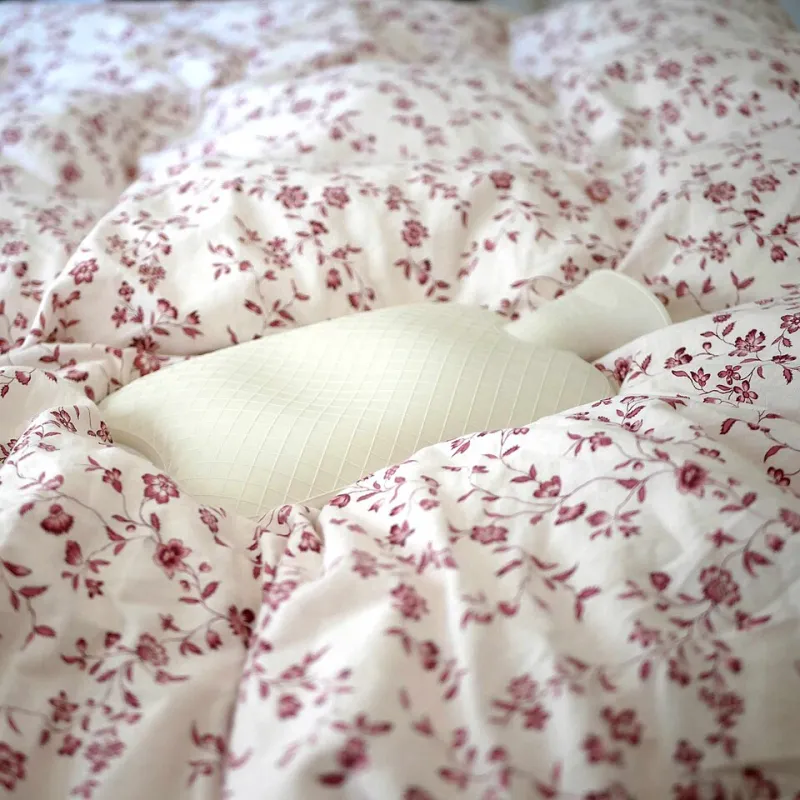
Photo: Vulvani, CC BY-SA 4.0, via Wikimedia Commons
There is a particular kind of November evening in the UK when the dark arrives before you have decided what to cook, the radiator makes its first clank, and the kettle becomes the most-used appliance in the house. On those evenings, a hot water bottle is not a wellness trend. It is a practical object with a screw top and a slightly bobbly cover. And that is exactly why it can work as a mindfulness teacher.
Embodiment is not about floating above your life on a cloud of calm. It is about getting back into the felt sense of being a body in a room: the weight of your feet, the temperature of the air, the places where you are holding on. A hot water bottle offers all of that in a form small enough to hold.
Why warmth gets through when words do not
Your skin is packed with thermoreceptors — nerve endings that respond to changes in temperature. Warmth is a clear, bounded signal. It is not vague. You do not have to interpret it. You can feel where the heat is, where it fades, and how the cover changes the sensation against your hands or lap.
That matters because winter pulls attention outward. There is weather to negotiate, dark commutes, news to scroll through, and the low-level admin of keeping a household warm. Interoception — the sense of what is happening inside your body — can get quiet in the background. A warm object gives attention somewhere simple to land.
It is worth being evidence-aware here. Warmth can be comforting, and comfort can be a cue of safety, but a hot water bottle is not a treatment for anxiety, low mood or any medical condition. The nervous system is not a light switch. What this practice offers is a small, repeatable way to notice sensation without immediately turning it into a story.
The ordinary object beats the gadget
Wellness gadgets often arrive with an instruction manual and a quiet implication that you are not yet doing your body correctly. A hot water bottle asks nothing. It does not need charging, syncing, updating or a subscription. It does not track your progress. It is almost aggressively unglamorous, which is part of its charm.
The same is true of the kettle, the radiator, a heavy blanket, a mug held in both hands. Everyday objects are already woven into your routine, so they do not require a new identity as a person who does wellness practices. They simply require a few minutes of your attention.
Safety matters, of course. Use a cover, avoid holding it against bare skin for long periods, check for leaks or cracks, and follow the manufacturer’s guidance. If you have reduced sensation, nerve damage, circulatory problems or skin that is fragile, take advice before using one. This is a comfort practice, not a test of endurance.
A three-minute practice
Set up with a hot water bottle that is safely filled and covered. Sit somewhere you can be still for three minutes. You do not need a timer, but one can help if your mind likes a boundary.
1. Arrive in the room
Feel your feet on the floor. Feel the seat beneath you. Let your hands rest around the bottle, or place it on your lap. Notice the first thing you feel — weight, warmth, the texture of the cover, the shape of the screw top.
2. Follow the warmth
Notice where the heat is strongest. Notice where it fades. Is it pleasant, neutral, or slightly too warm? You do not have to change the answer. If your mind says this is silly, notice that too. Thoughts are allowed.
3. Let the breath be ordinary
Do not breathe in a special way. Just notice one inhale and one exhale. See whether your shoulders soften. See whether they do not. There is no correct result.
4. Name what is here
Try a quiet internal label: warmth, pressure, softness, tension, tiredness, a thought about tomorrow. Label it once and let it be. This is the interoceptive part — noticing sensation without immediately asking it to justify itself.
5. Close gently
At the end, notice one thing that changed and one thing that stayed the same. Perhaps your hands feel warmer. Perhaps your jaw is still tight. Both are information. Then put the bottle down, or keep holding it, and return to your evening.
When it does not feel calming
Sometimes warmth will not feel soothing. If you are anxious, overheated, in pain or simply not in the mood, forcing a pleasant experience will only add pressure. Mindfulness is not a performance of serenity. The point is not to feel calm; it is to feel what is actually there, with a little less argument.
If noticing body sensations feels distressing, go gently and consider talking to a GP or a qualified practitioner. Embodiment practices should increase your sense of choice, not remove it.
A winter ritual that is not a project
You can use this while reading, before bed, at your desk, or during the ten minutes when dinner is in the oven. It does not need to become a daily streak. The hot water bottle is a teacher only in the sense that any ordinary thing can be: it asks you to pay attention for a moment, and then lets you go.
In a season that can feel dark and demanding, that small exchange is enough. Warmth in the palm of your hand. A body that is here. A moment that does not need to be optimised.